

RAGAA Holds Its Second Public Event: “Afghan Women in Search of Stolen Justice: Anatomy of a Historic Trial”
- Mar 5
- 2 min read
The roundtable “Afghan Women in Search of Stolen Justice: Anatomy of a Historic Trial”, held on 25 February in Barcelona, became an important forum for analysis and mobilisation around one of the most significant international processes of recent years: the 55th Session of the Permanent Peoples’ Tribunal on the Women of Afghanistan.
The event was organised by FIBGAR within the framework of its initiative RAGAA (Raise Against Gender Apartheid in Afghanistan), in collaboration with People Help, Casa Asia, the Permanent Peoples’ Tribunal on the Women of Afghanistan, and the Diputació de Barcelona. It brought together experts, representatives of civil society organisations, and members of the public interested in understanding the legal and political significance of the judgment issued by this international opinion tribunal.
During the first part of the event, Elisenda Calvet-Martínez, judge of the Tribunal; Orzala Nemat, prosecutor in the proceedings; and Haroon Mutasem, representative of the Afghan organisation Rawadari—one of the entities that promoted the Tribunal—offered a detailed overview of the origins, functioning, and relevance of the process. Their interventions helped contextualise the role of the Permanent Peoples’ Tribunal as a space for ethical justice and international visibility when formal mechanisms prove insufficient to address systematic human rights violations.
Particular attention was given to the judgment publicly delivered on 11 December 2025 in The Hague, which concluded the Tribunal’s 55th session following hearings held in Madrid between 8 and 10 October 2025. The ruling recognises that the policies imposed against women in Afghanistan—such as prohibitions on access to education, employment, political participation, and freedom of movement—do not merely constitute acts of discrimination. According to the Tribunal’s conclusion, these measures form part of a structured system of exclusion that may amount to crimes against humanity, including persecution on gender grounds.
The pronouncement represents significant support for the claims that Afghan women have been raising for more than four years and reinforces the call for the international community to adopt concrete measures aimed at justice, international accountability, and the protection of fundamental rights.
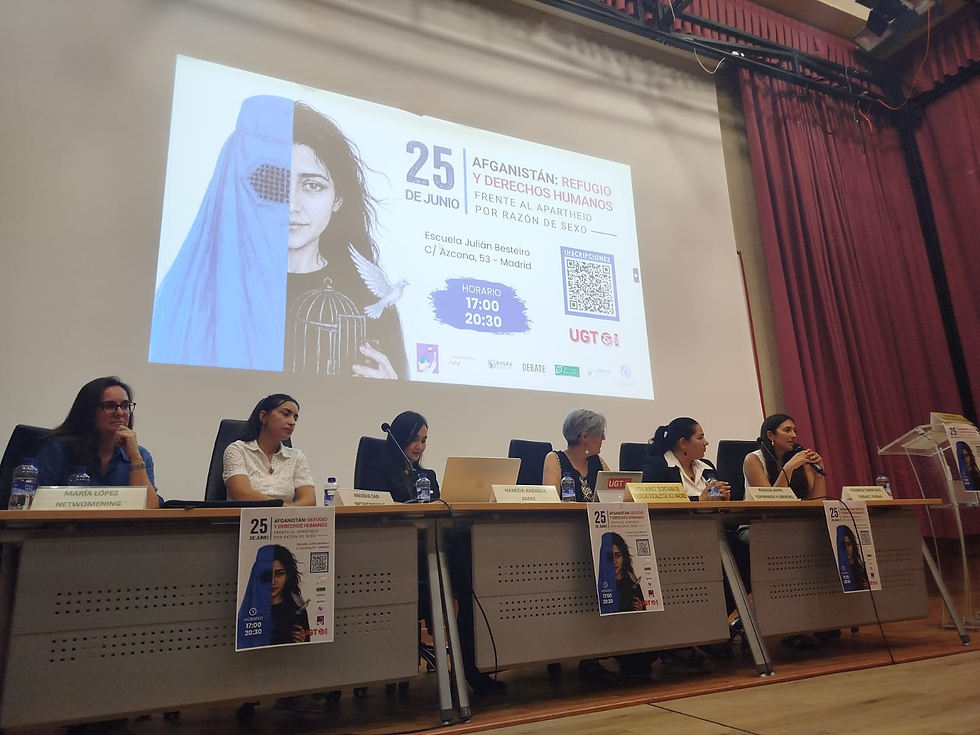
The second part of the event focused on situating this decision within the broader global mobilisation seeking recognition of gender apartheid as a crime against humanity. The session featured contributions from Alessia Schiavon, Director of FIBGAR and coordinator of RAGAA; Farzana Tareq, medical student and member of People Help; and Silvia Sala, Vice-President of People Help and member of RAGAA.
The speakers addressed the current context in Afghanistan and outlined the various international initiatives aimed at advancing the legal recognition of gender apartheid within international law. They also presented the actions being developed through the RAGAA campaign, a platform that coordinates legal advocacy, political engagement, and civil society mobilisation at the global level.
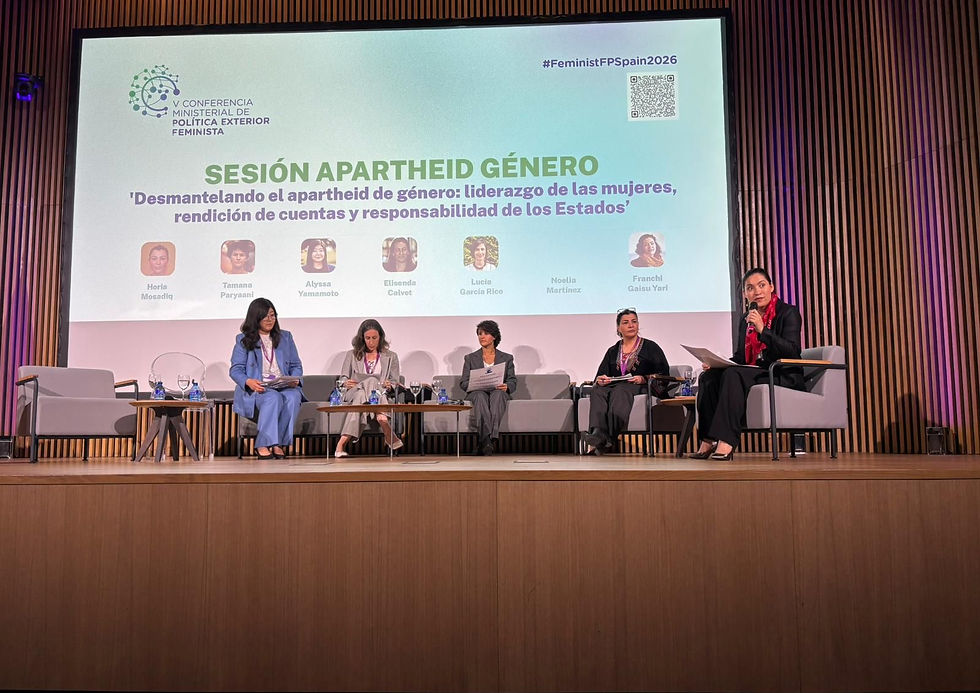
One of the most significant aspects of the event was the recognition of the leadership of Afghan women, whose resilience and organisational capacity have been essential in maintaining international attention on the situation in the country and in advancing innovative legal initiatives such as the Tribunal itself.
The event concluded with an open exchange among participants, providing an opportunity to strengthen collaborative networks and foster new alliances to continue promoting international action in favour of justice, dignity, and the rights of Afghan women.
Comments